
Probing Ahead: A Look at the Latest in Seismic-While-Drilling and GPR for TBMs

By Ellie Gabel
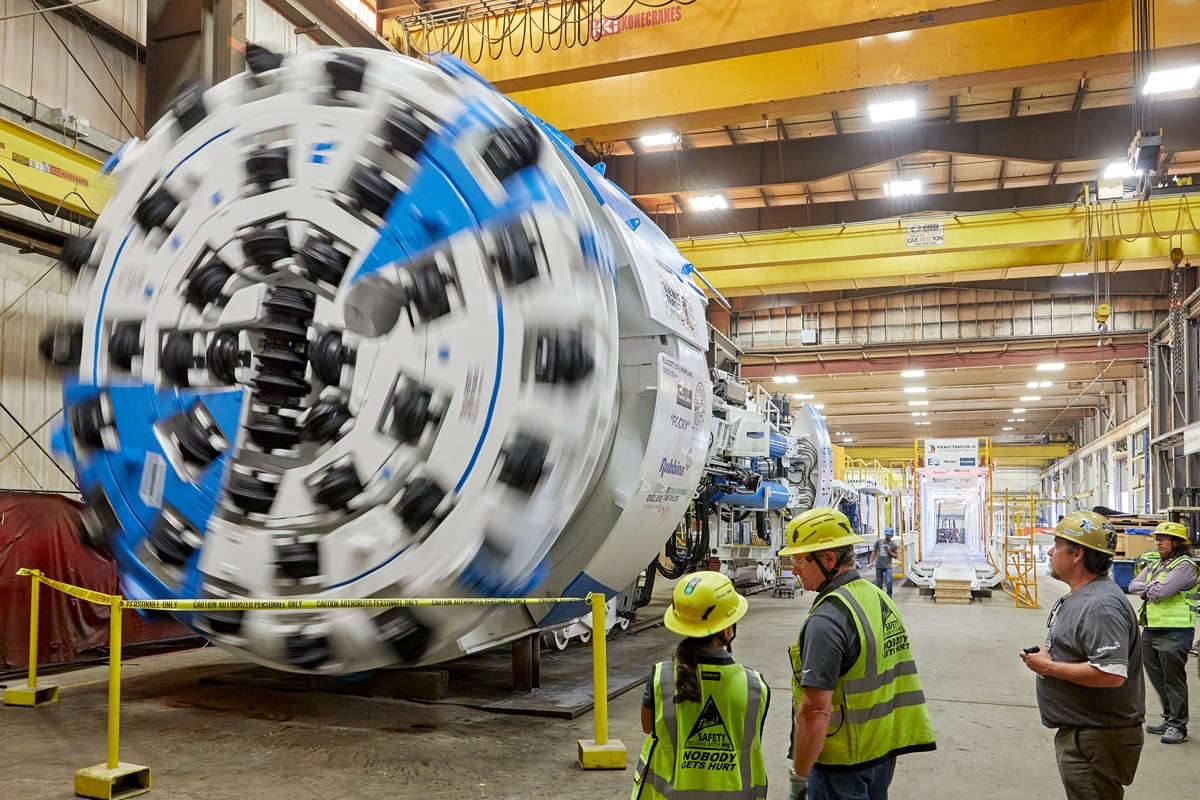
Tunnel drilling technology relies on a myriad of trusted, advanced methods to ensure the utmost quality and safety of the process. Tunnel boring machines (TBMs) prove consistently effective for successful tunnel drilling projects. However, these heavy machines can be dangerous without proper knowledge of the landscape they are drilling into. Geological imaging advancements like seismic-while-drilling (SWD) technology and ground-penetrating radar (GPR) may be the future of safety and efficiency in the construction industry.
Increasing Need for Safety
Unfortunately, the construction sector is an increasingly dangerous profession, showing fatality rates at their highest in 2023 since 2011. With rapid advancements in every industry, there is no excuse for these statistics. The technology to create safer workspaces exists. It’s just a matter of using resources to apply them.
Despite TBMs’ durability and quality, they are not adaptable to every terrain. Geological hazards are the main risk for these heavy machines. Unexpected fault lines and accidental ground collapse, large impenetrable obstacles, or even a rush of water from striking a water-bearing structure could disrupt entire projects and put the lives of workers and civilians at risk.
Some modern TBMs may come equipped with electric engines or advanced monitoring systems, but predicting the terrain remains the biggest difficulty. With safety at the forefront, advanced developments in seismic detection are necessary to predict the terrain and mitigate these risks.
Tunnel-While-Seismic-Drilling Method
SWD is a method used particularly in oil drilling to determine disturbances in the drill path through seismic waves. Measurement devices collect data from the waves produced during drilling to create images that predict the geological formations ahead and safely continue forward. As a noninvasive method that provides real-time results, SWD offers an incredible opportunity to incorporate technology to increase safe and effective drilling.
During the cutting and drilling processes, TBMs produce an abundance of seismic waves, which radiate into the rock masses and through the machine itself. Tunnel-seismic-while-drilling (TSWD) uses the TBM as the source for determining the seismic waves and the geological path ahead.
However, this method is limited both in technology and in preparation. Applications for this method are not standardized, as scientists continue studying different methodologies. Furthermore, the real-time results are useful in the moment but require active drilling for predictions rather than providing information far ahead of time.
GPR Predictions
Another nondestructive method used in tunnel drilling is GPR, which uses electromagnetic (EM) waves to create images of the terrain ahead. It is typically used to predict grouting layer thickness, but the data can be challenging to interpret because obstacles interfere with and scatter the EM waves.
Though this method is generally limited to 10 meters below the surface, the technology produces high-resolution images that can provide increasingly accurate depictions of the surfaces before drilling alongside other methods, particularly to fill the gaps from the SWD data.
Bridging the Tech
While both technologies are incredible advancements for drilling, there is more to be done. Studies in transient electromagnetic radar may determine that it more effectively predicts tunnel lining than GPR without the EM wave interference. Seismic readings, too, may be useful in determining the location of the obstacles that scatter the waves. The TSWD and GPR could be successful working cooperatively to predict tunnel behaviors.
Safety First
Though technological advancements in the drilling and construction industries may prove exciting because they increase efficiency, it’s important to consider the safety of workers first and foremost. The technology and expert understanding of science are still growing. Developing these efficiently is critical to ensuring sites are safe before embarking on the next endeavor.
Ellie Gabel is a freelance writer who specializes in covering the latest innovations in science and technology for an audience of industrial professionals. She is also the associate editor at Revolutionized.com.

Comments are closed here.