
ACI Concrete Convention Brings the Concrete Industry Together in Baltimore
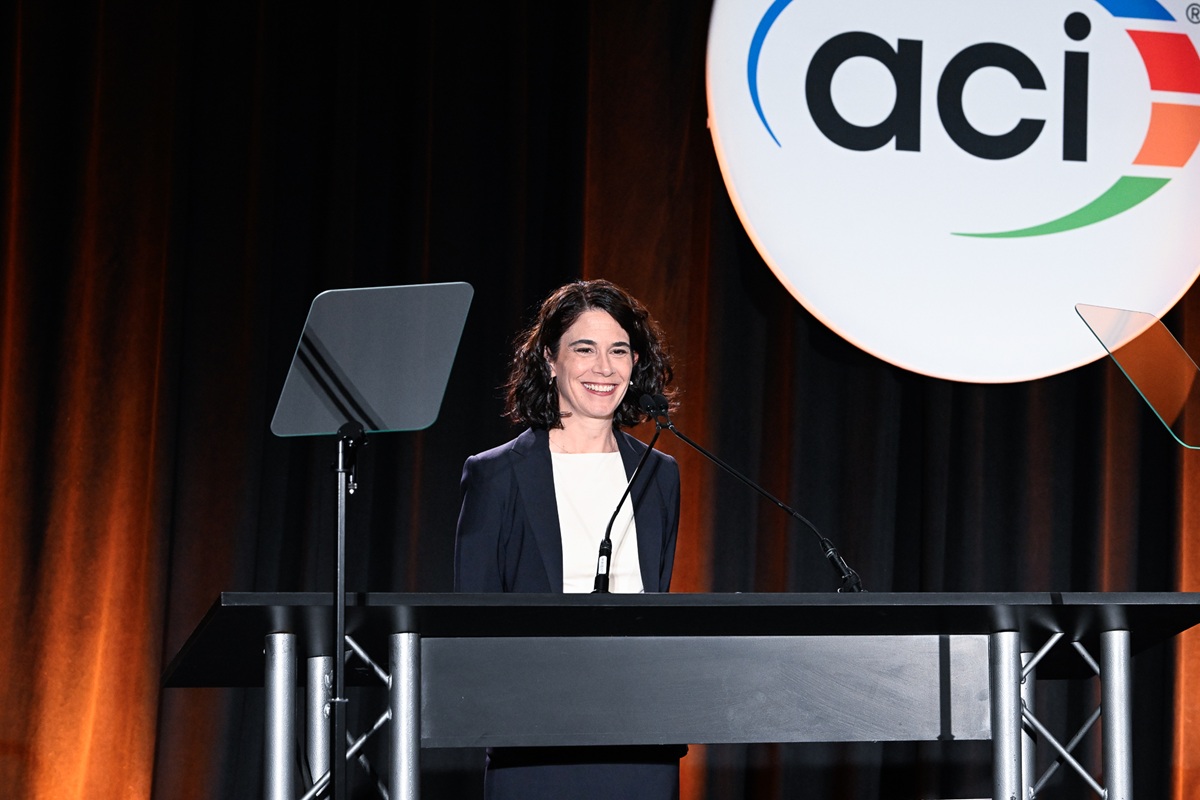
The concrete community came together in Baltimore, Maryland, Oct. 26-29, 2025, in celebration of the 200th ACI Concrete Convention, the world’s gathering place for advancing concrete. Close to 2,500 professionals and students from more than 70 countries attended, including researchers, practitioners, and industry leaders, to share knowledge and drive innovation in the design, construction, maintenance, and repair of concrete projects. Over four days, attendees participated in educational sessions, networking events, committee meetings, and a student competition, totaling more than 100 hours of industry-leading content.
“We are thrilled by the remarkable turnout and engagement at the Fall 2025 ACI Concrete Convention in Baltimore. Bringing together the brightest minds in concrete materials, design, construction, and research, this year’s gathering has reaffirmed our commitment to innovation, collaboration, and excellence in the industry,” said Frederick H. Grubbe, executive vice president, ACI. “We extend our sincere thanks to all attendees, exhibitors, and allied organizations who helped make this event a catalyst for advancing concrete knowledge and practice.”
The ACI Convention kicked off with the Egg Protection Device (EPD) Student Competition, where the objective was to design and build plain or reinforced concrete devices capable of withstanding the highest impact load. This marked the first EPD Competition held in 10 years, bringing renewed excitement and innovation to one of ACI’s most popular student challenges.
Thirty-seven teams from the USA, Mexico, Ecuador, Egypt, Peru, Guatemala, Chile, the Philippines, and Puerto Rico submitted entries for judging in two categories: Technical Performance and Aesthetics. Cash prizes of $750, $500, and $250 were awarded to first, second, and third place, respectively, in Technical Performance.
Opening Session
On Sunday evening, Oct. 26, ACI welcomed attendees to Baltimore and set the stage for the week ahead. Emceed by ACI Past President Cary Kopczynski, the program featured remarks from ACI President Maria Juenger, who highlighted the 200th convention milestone, shared updates on ACI University, the ACI Centers of Excellence, ACI Certification programs, and encouraged continued support for the ACI Foundation.
The evening also featured the presentation of ACI’s Fall Annual Awards, recognizing members for their contributions to innovation, education, and sustainability in the concrete industry. Remarks from ACI Executive Vice President Frederick H. Grubbe, a welcome from the ACI Maryland Chapter, and a keynote address by ACI Honorary Member and Past President Ken Hover provided inspiration and insight for the concrete community.
The ACI International Forum was held on Monday morning, Oct. 27, providing attendees with insights from international concrete organizations and chapter representatives around the world. Chaired by ACI Vice President Scott Anderson, speakers shared updates on industry trends, innovations, and global initiatives in concrete design, materials, and construction.
Following the forum, the International Lunch featured a keynote presentation by Prof. Marco Menegotto on the development of prefabricated structural concrete in Europe, exploring advances in construction techniques, materials, sustainability, and standardization.
Concrete Repair Day
Tuesday, Oct. 28, was Concrete Repair Day at the ACI Convention, sponsored by the International Concrete Repair Institute (ICRI). The day featured technical sessions led by industry experts who discussed workforce training, productivity challenges, and best practices for surface preparation in concrete restoration.
During the Concrete Repair Day Lunch, guest speaker Fred R. Goodwin presented How Does Concrete Deteriorate & What to Do About It? providing practical guidance on identifying causes of deterioration and strategies for prevention and repair.
Awards Gala
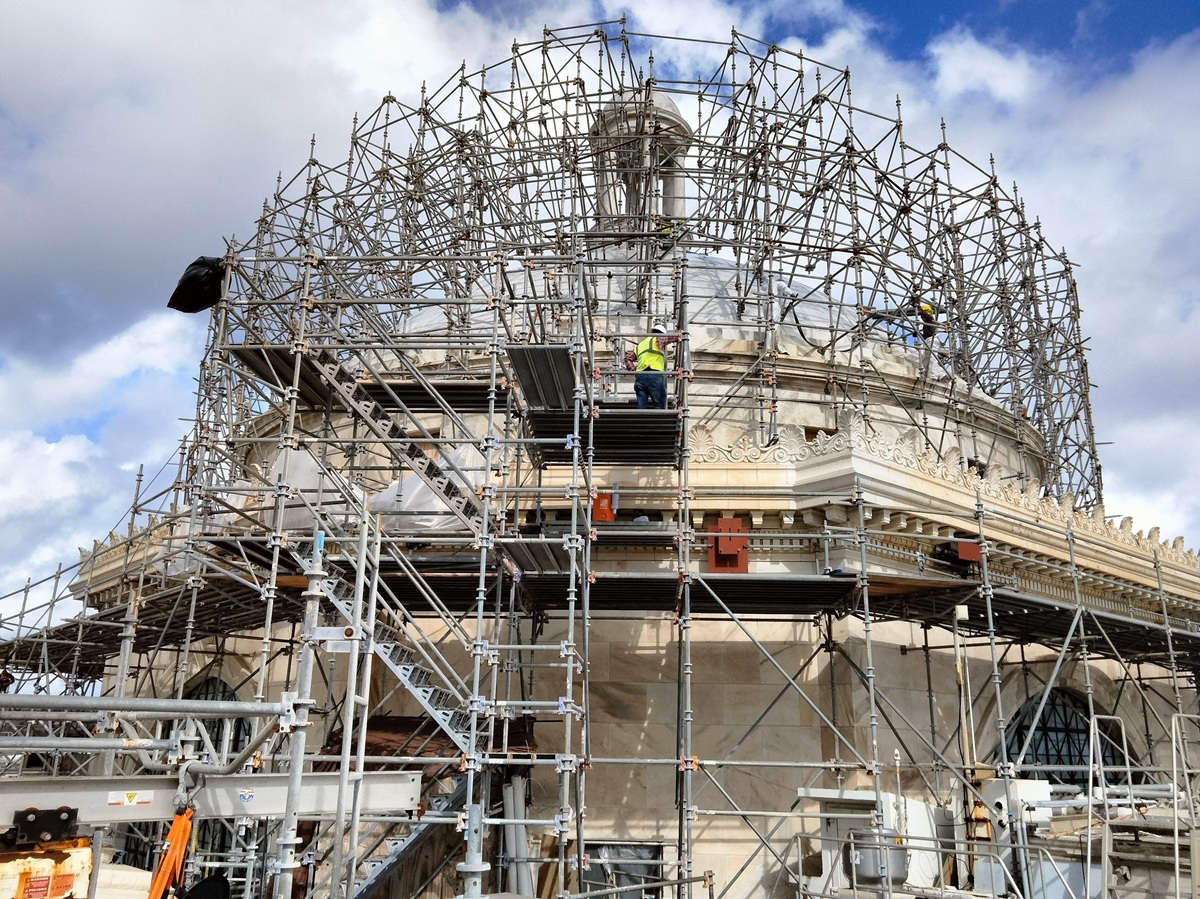
The 11th annual ACI Excellence in Concrete Construction Awards showcased dozens of innovative concrete projects from around the world. The “Overall Excellence” award was presented to Capitol Dome, located in San Juan, Puerto Rico. The winning concrete project also received first place in the Repair and Restoration Structures category during the ACI Concrete Convention on Monday, Oct. 27.
The project restored the historic 1929 dome through innovative repair methods, including micro-cement injection, fiber-reinforced polymer reinforcement, and specialty anchor installations. The work preserved the structure’s historic character while strengthening it for long-term performance.
In addition to the highest honor, the Overall Excellence award, additional projects recognized during the ACI Excellence in Concrete Construction Awards include:
- Repair & Restoration
- 1st Place: Capitol Dome, in San Juan, PR, USA – The Capitol Dome in San Juan, Puerto Rico, was restored over two years to fix structural damage while keeping its historic character. Modern techniques like carbon-fiber reinforcement and micro-cement injections were used to ensure it will last for generations.
- 2nd Place: UCSD York Hall, in La Jolla, CA, USA – The UCSD York Hall seismic improvements project in La Jolla, California, involved retrofitting and strengthening this 1966 historic building while preserving its architectural heritage.
- Decorative Concrete
- 1st Place: California Firefighters Memorial, in Sacramento, CA, USA – The California Firefighters Memorial in Sacramento honors more than 1,500 firefighters who have died in the line of duty since 1850. Combining monuments, statues, and carefully crafted decorative concrete, the memorial creates a meaningful and lasting space for reflection.
- 2nd Place: Campus Development Project of Indian Institute of Technology Hyderabad (Phase-2) – Package 3B, in Telangana, India – The Indian Institute of Technology Hyderabad Phase-2 campus integrates advanced architectural form-finish concrete across lecture halls, department buildings, dining halls, and core labs.
- Low-Rise Structures
- 1st Place: The Altamura Home, in Santa Rosa, CA, USA – Designed and built for maximum efficiency, the Altamura residence in Santa Rosa, California, is a Net Zero home that uses a Passive Geo Insulated Concrete Shell to naturally regulate temperature without mechanical systems.
- 2nd Place: Project Heat, in Chicago, IL, USA – This two-story, 250,000-square-foot warehouse is Chicago’s first multi-level facility allowing full-sized semi-truck access on both floors. With clear spans up to 60 feet, a rooftop parking deck, and over 73,000 cubic yards of concrete, the project used precision pouring and sustainable methods to create a strong, efficient, and durable structure.
- Mid-Rise Structures
- 1st Place: City of Hope – Hope Plaza, in Duarte, CA, USA – Hope Plaza is an eight-story outpatient facility in Duarte, California, with 352,000 square feet of space. Its design features colorful walkways, custom seating, and a cascading fountain, blending structural and landscape concrete to create a welcoming, durable space for patients and visitors.
- 2nd Place: National Taiwan University Humanities Hall, in Taipei City, Taiwan – The Humanities Hall is a modern academic building at the National Taiwan University in Taipei (TIE-PAY) City, Taiwan, linking campus, heritage, and city, with a 50-meter sky bridge. Designed with a vision for longevity of over 100 years, the Hall aspires to stand as an emblem alongside their iconic Main Gate and College of Liberal Arts.
- Honorable Mention: Shanghai Grand Opera House, in Shanghai, China – The Shanghai Grand Opera House is known for its striking spiral staircase shaped like an open Chinese fan. Built with prefabricated and cast-in-place ultra-high-performance concrete, it achieves long cantilevers while cutting carbon emissions, making it both a structural and cultural landmark.
- High-Rise Structures
- 1st Place: Satsukita 8-1, in Sapporo, Hokkaido, Japan – Satsukita 8-1 is the tallest skyscraper in Hokkaido, Japan, at 48 stories, rising 175 meters. Designed for cold, snowy conditions, the building uses reinforced concrete for earthquake and wind resilience, with high-strength columns, girders, and shear reinforcement.
- 2nd Place:The Ayer, in Seattle, WA, USA – The Ayer is a 45-story, 576,000-square-foot residential tower in Seattle, Washington. Its cast-in-place concrete structure features 8-inch post-tensioned slabs, perimeter cantilevers up to 12 feet, and a shear wall core for seismic and wind resistance.
- Infrastructure
- 1st Place: Romaine-4 Generating Station, in Havre-St-Pierre, QC, Canada – Romaine-4 is the final hydropower plant of the Romaine complex in Quebec, Canada, now producing 1,550 megawatts of clean electricity. Built in a remote region of Quebec, the project relied on close collaboration with local and indigenous communities.
- 2nd Place: King Salman Energy Park (SPARK), in Abqaiq, Eastern Province, KSA – SPARK, a cornerstone of Saudi Arabia’s Vision 2030, delivers world-class industrial and energy infrastructure across 14 square kilometers of Phase 1.
- Bridges
- 1st Place: Delhi-Meerut Rapid Rail Transit System, in Meerut, India – India’s first semi-high-speed rail in Meerut connects regional nodes with a dedicated corridor, cutting travel time between Delhi and Meerut to 55 minutes. The 42-kilometer viaduct uses precast segmental box girders and portal beams to minimize construction disruption.
- 2nd Place: Cebu Cordova Link Expressway, in Cebu City, Philippines – This 8.9-kilometer expressway on Mactan Island connects Cordova to Cebu City, helping to ease traffic and support the local economy. Built despite COVID and Super Typhoon Rai, it used 185,000 cubic meters of concrete and advanced construction technologies like a launching gantry and large-diameter paver.
- Flatwork
- 1st Place: Low Carbon Concrete: Bus Charging Station, in Salt Lake City, UT, USA – Low Carbon Electric Bus Charging Station demonstrates innovative low-carbon concrete using Roman Cement’s patented technology, improving cement hydration, particle packing, and workability while reducing cement use, cost, and CO2 emissions by 20%.
- 2nd Place: Apron and Taxiway Project for T3, TTIA, in Taoyuan City, Taiwan – The project installed over 13,000 concrete slabs at Taoyuan Airport, designed to handle heavy aircraft, extreme weather, and long-term durability. Advanced techniques like LIDAR leveling and specialized curing ensured flat, strong, and carbon-conscious pavement under active airport operations.
The awards ceremony was livestreamed on the ACI YouTube channel, allowing viewers from around the world to join in celebrating the winning projects and their teams. The full broadcast is available for viewing at youtube.com/ACI.
The winning project details can be found at ACIExcellence.org. Entries for the 2026 ACI Excellence in Concrete Construction Awards are now being accepted now through April 1, 2026.
The ACI Concrete Convention continues the tradition as the world’s gathering place for advancing concrete. Mark your calendar for ACI next convention, scheduled for March 29 – April 1, 2026, in Rosemont/Chicago, IL, USA.
Comments are closed here.