
Air Pressure Specs That Make or Break Your TBM: A Superintendent’s Field Guide to System Optimization
By Emily Newton
The pressurized air associated with a tunnel boring machine plays an important role in preventing collapse. Even so, superintendents and others working on tunneling projects must understand the appropriate TBM pressure specifications and apply them to individual circumstances as needed. The following steps outline how decision-makers can optimize outcomes while maintaining safety and productivity.
Choose the Right TBM for the Soil Type
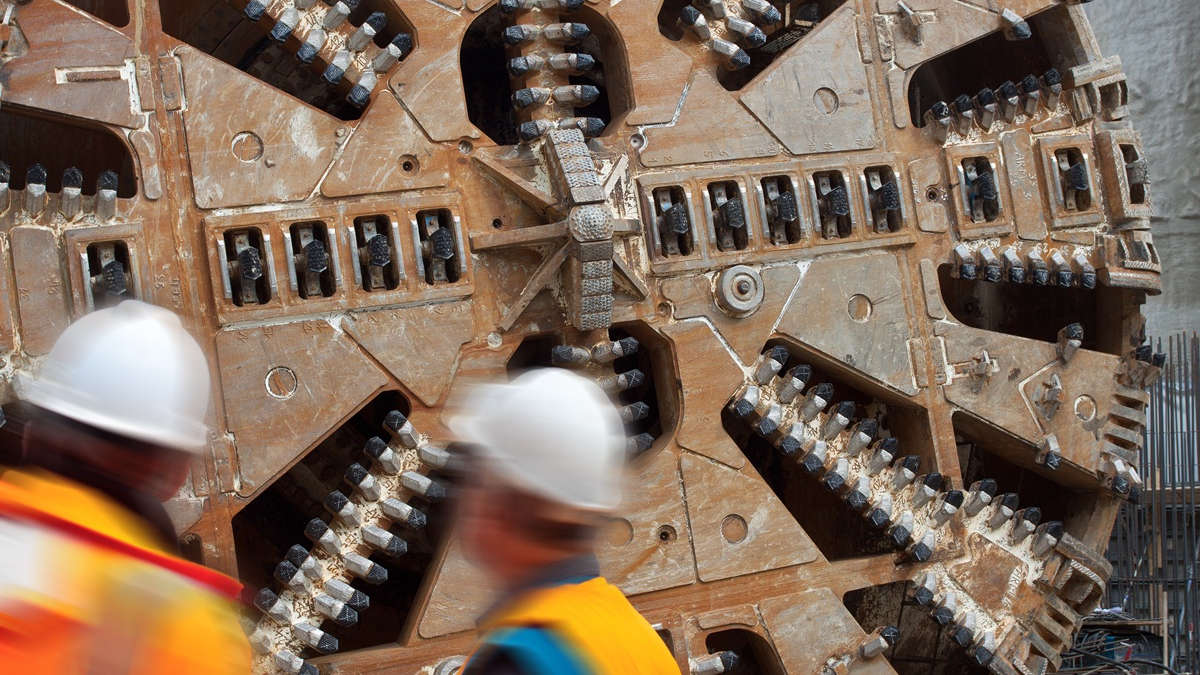
All TBMs have large, circular parts on the front that break up the ground at the tunnel face using attached cutting tools and tremendous rotational force. Sealed chambers of pressurized air sit behind the cutterhead to push back against the soil and water, creating an equilibrium that keeps the tunnel face stable during excavation. Slurry shield TBMs and earth pressure balance TBMs are the two main types that use air pressure this way. Those pursuing tunnel compressed air optimization must understand the site’s soil type before proceeding.
Slurry Shield TBMs support that channel phase with a pressurized slurry made of water and bentonite clay. The slurry gets pumped into the front chamber and mixes with the excavated material. Reuse is also possible when people pump the mixture out of the tunnel and to a separation plant. There, the excavated dirt is sifted from the slurry. These types of TBMs work best in granular soils, such as gravel or sand, and people typically get the best results by using high water pressure.
Earth Pressure Balance TBMs rely on the excavated soil to match the pressure of the surrounding ground. In this case, the cutting head transforms the soil into a paste-like consistency, which fills the front chamber. A screw conveyor slowly removes the excavated material from that area. Superintendents and other decision-makers should consider this type of TBM when working with cohesive soils, including silt and clay.
Match the Air Pressure Specs to the Surrounding Soil
In one real-world example that highlights the importance of soil assessments, leaders working on a tunnel beneath Australia’s Sydney Harbour recognized that the environment would dictate the type of TBM they must use. The project director said soil consistency was like jelly or yogurt rather than hard sandstone. The erosion channel under the harbor also features a diverse makeup consisting of plant material, clays, peats, silts and soft sediments. Team members decided to tackle the job with a Slurry Shield TBM.
Working safely with this machine also required understanding the water pressure associated with working 40 meters below sea level. Operators also needed an automatically controlled air cushion that precisely controlled the support pressure. The equipment also included a pair of independent pressurized chambers with two airlock doors. These allowed workers to inspect the TBM and change the cutting tools.
As work on this challenging project progressed, participants recognized the need to adapt to changing conditions. In one case, they noticed a problem associated with a high-pressure air bubble in front of the TBM that kept water out as it moved. An investigation revealed that the air bubble was under such a high level of pressure that it began leaking through the soft sediment. Once decision-makers verified the phenomenon, they stopped the leak within a few hours and proceeded with the project.
Assess Project-Related Risks and Address Them When Possible
Pounds per square inch (PSI) and cubic feet per minute (CFM) are two common specifications associated with industrial air compressors. PSI measures the force, while CFM relates to the air movement speed. When purchasing air compressors, it is essential to find models that meet or go beyond the highest PSI requirement and have adequate CFM capabilities.
Those purchasing must also consider the surrounding environment, as this will help determine whether to rule out specific types. For example, the pharmaceutical and food processing industries need oil-free types to prevent contamination risks that could lead to recalls and other quality control issues. Rotary-screw compressors are popular options in many industrial environments because they provide continuous air pressure at relatively low force.
Superintendents working on tunneling projects must study the environment to assess the risks of subsidence due to factors such as dense urbanization. In an example in Italy, a contractor utilized increased air pressure to maintain a hyperbaric atmosphere in a section of tunnel constructed beneath the Naples-Bari high-speed railway.
This approach required workers to stay inside a compression chamber for 20 minutes before going to the excavation site. However, the contractors prioritized this option because it does not remove groundwater, soil and rock through the TBM. Instead, air compressors create higher air pressure to push groundwater out of the excavation area, keeping it separated from cement mixtures and chemical additives associated with the tunnel construction.
The setup also meant that the air pressure fluctuated between approximately 0.3 and 1.2 atmospheres, depending on the specific excavation phase. That detail highlights how decision-makers concerned with TBM pressure specifications should consider how they change depending on the type of work completed.
Determine the Minimum Required Support Pressure
The minimum required support pressure for a tunneling project is a critical metric that prevents ground settlement. This varies depending on site-specific factors, such as the amount of groundwater and its associated pressure, soil statistics and the diameter and depth of a tunnel. Appropriately administered levels of air pressure counteract the weight of the soil. Even so, engineers must also calculate complementary factors, such as buildings and roads constructed on top of or near the area.
An academic paper that explored methods for calculating the minimum required support pressure cited a tunnel project in the Netherlands, whereby a sensitivity analysis showed that increased cohesiveness decreased the support pressure needed to stabilize the tunnel face. The researchers cautioned, though, that there was a misalignment between that trend and the evaluated support pressure, indicating a lack of consistency. Another finding was that the support pressure rose along with the depth-to-diameter ratio.
Another important detail was that the researchers compared numerical calculation methods with real-world conditions, finding that they effectively replicated conditions between the two. These conclusions could allow superintendents to keep site crews safer while preventing the sustainability risks associated with overexcavation.
Take TBM Pressure Specifications Seriously
These tips highlight how there is more to optimizing a TBM’s air pressure specifications than leaders may initially consider. Assessing all these factors — along with others specific to the individual project — reinforces safety, productivity and operational uptime.
Emily Newton is a construction and industrial journalist.

Comments are closed here.