
Can Robots Reduce the Need for Human Access?
By Ellie Gabel
Tunneling and underground construction expose crews to rockbursts, water ingress, constrained evacuation routes and heavy equipment operating in confined headings. Project teams have always looked for ways to reduce that exposure while still delivering on cost and schedule. From improved ground support systems to sophisticated monitoring, the industry continues to shift risk away from people and toward engineered solutions. Increasingly, that push includes robotics and automation that change how often workers need to enter the heading and what they do once they are there.
Current Solutions for Minimizing Human Presence in Underground Construction
Before robotics entered the picture, underground construction reduced human exposure through method selection, equipment upgrades and smarter access systems. Systematic ground investigation and numerical modeling remain essential for identifying high-risk zones and choosing excavation sequences that limit time spent under unsupported ground. Pre-excavation grouting, forepoling and lining designs help stabilize the face and surrounding ground, which directly reduces manual scaling and emergency interventions.
Mechanized equipment has already largely done away with hand tools. Roadheaders, drill jumbos and fully mechanized shotcrete systems cut back on manual drilling and hand spraying. Remote control functions on jumbos and load-haul-dump units allow operators to work from shielded cabs or control rooms during the most hazardous activities.
Smart choices in access control also reduce manual effort. Scaffolding remains fundamental for shaft work, caverns and cross passages. In regions where labor is expensive, contractors often prioritize aluminum scaffolds because their lower weight simplifies handling and speeds erection, shortening the time crews spend assembling access platforms. Aluminum systems also save considerable labor hours over repeated use because they are easier to move and reconfigure.
Alongside that, digital planning tools optimize logistics so fewer people need to be underground at once. Central traffic management, ventilation-on-demand and real-time tracking systems help control how many workers are exposed and for how long. These solutions do not rely on robots, yet they already align with the same goal — to minimize unnecessary human presence in high-risk zones.
The Rise of Robotics in Tunneling Operations
Robotics builds on those foundations by adding systems that can sense, decide and act without a person standing beside the machine. The most progress so far appears in tunneling, where repetitive geometry and constrained environments favor automation.
Research into intelligent tunneling robot systems for deep, long tunnels shows how multiple robotic subsystems can be coordinated through a central decision platform. This platform then adjusts excavation parameters based on rock conditions and monitoring feedback.
Autonomous Tunnel Boring and Excavation
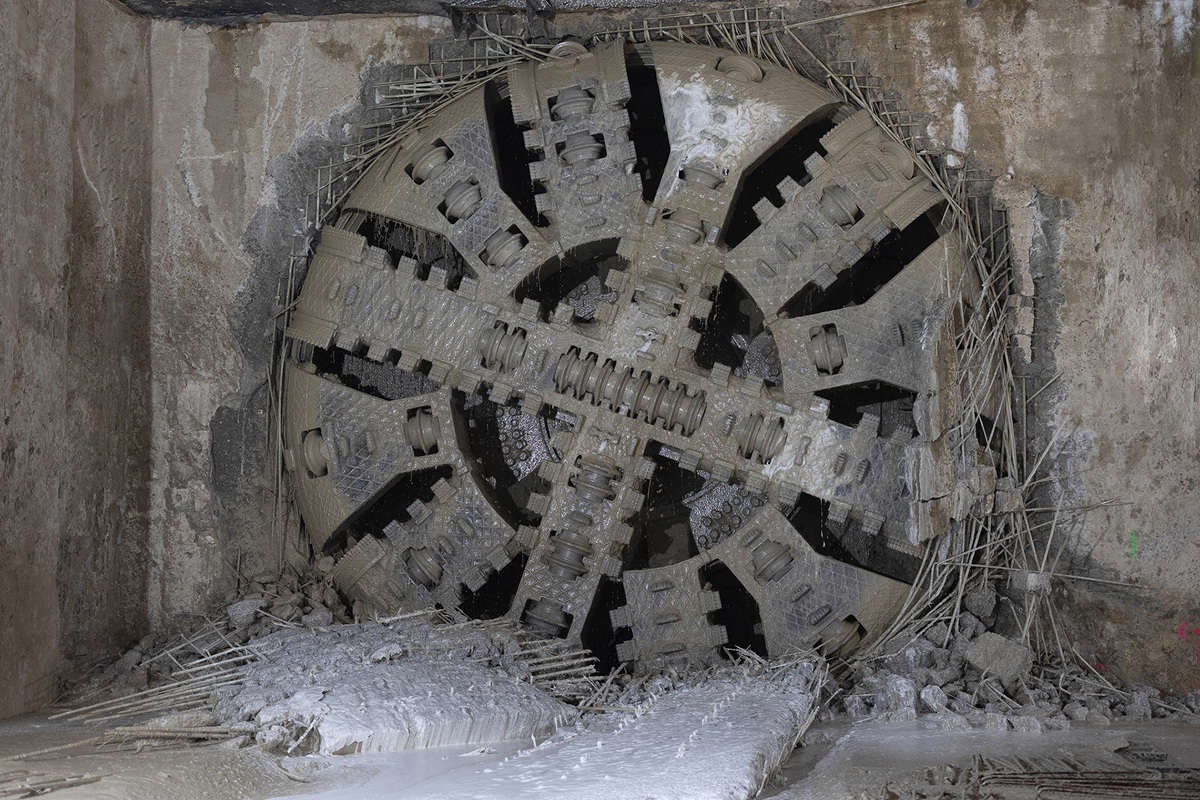
Modern tunnel boring machines (TBM) already centralize many hazardous operations inside a shield. Recent projects take that further through higher levels of automation in steering, pressure control and segment erection. Some TBMs can advance about 180 meters per week with automated systems handling critical functions such as guidance and segment placement, while operators supervise and intervene as necessary.
Excavation parameters can also be adjusted automatically based on real-time monitoring of the surrounding rock. Algorithms can then recommend thrust, torque and advance rates to manage rockburst or water inflow risk. As these control systems mature, fewer operators need to be near the face during unstable phases, and more of the oversight can happen from protected control rooms.
Robotic Systems for Surveying and Monitoring
Autonomous ground robots have been demonstrated in underground mines that generate 3D maps using LiDAR and inertial sensors while navigating for extended periods without direct human control. Similar platforms can be used for tunnel projects to keep an eye on convergence, verify clearances and perform geotechnical inspections.
Scientists even developed a way for drones to investigate unknown tunnel construction sites using vision technology, demonstrating that a drone can map geometry and detect obstacles while avoiding moving equipment. In practical terms, this capability keeps crews off scaffolds or manlifts.
Automated Material Handling and Installation
Material handling creates repetitive exposure to equipment, which is a common source of incidents. Robotics in this space is still emerging yet already offers useful examples.
Segment erectors on TBMs have become increasingly automated, featuring robotic arms and vision systems that align segments and install bolts and gaskets. This reduces the need for manual adjustments in cramped tailskin zones. In cross passages and caverns, rail-mounted or track-mounted robots can take over some lifting and placement tasks for heavy components.
What a Robotic Future Means for Safety and a Human Workforce
The primary safety benefit of robotics in underground construction is that fewer people are directly exposed to hands-on tasks. By moving human involvement toward supervision, planning and system oversight, robotics reduces chronic hazards caused by dust, diesel fumes, noise and more.
Operators evolve into system managers who handle multiple machines, while electricians, fitters and mechanics add skills in sensors, networking and software maintenance. Surveyors become data analysts who interpret dense point clouds and real-time monitoring feeds rather than relying mainly on periodic manual shots.
Training programs will need to reflect these changes. Apprentices coming into tunneling may spend more time learning human-machine interface use and troubleshooting autonomous systems. Experienced miners, engineers and forepersons then carry crucial situational awareness of ground behavior and construction sequencing, which are still essential for configuring and controlling robotic systems.
The Path Forward — Challenges and Opportunities
Robotics in underground construction offers a clear path to reducing direct human access to hazardous zones, improving both safety and productivity. Organizations must commit to training and change management to capture the technology’s full value. As adoption grows, the workforce will trend toward higher-skill roles focused on supervision, analysis and system maintenance, while robotic systems handle the most dangerous and repetitive underground work.
Ellie Gabel is a freelance writer who specializes in covering the latest innovations in science and technology for an audience of industrial professionals. She is also the associate editor at Revolutionized.com.


Comments are closed here.