
Considerations for Rail-Based Muck Haulage in Tunneling
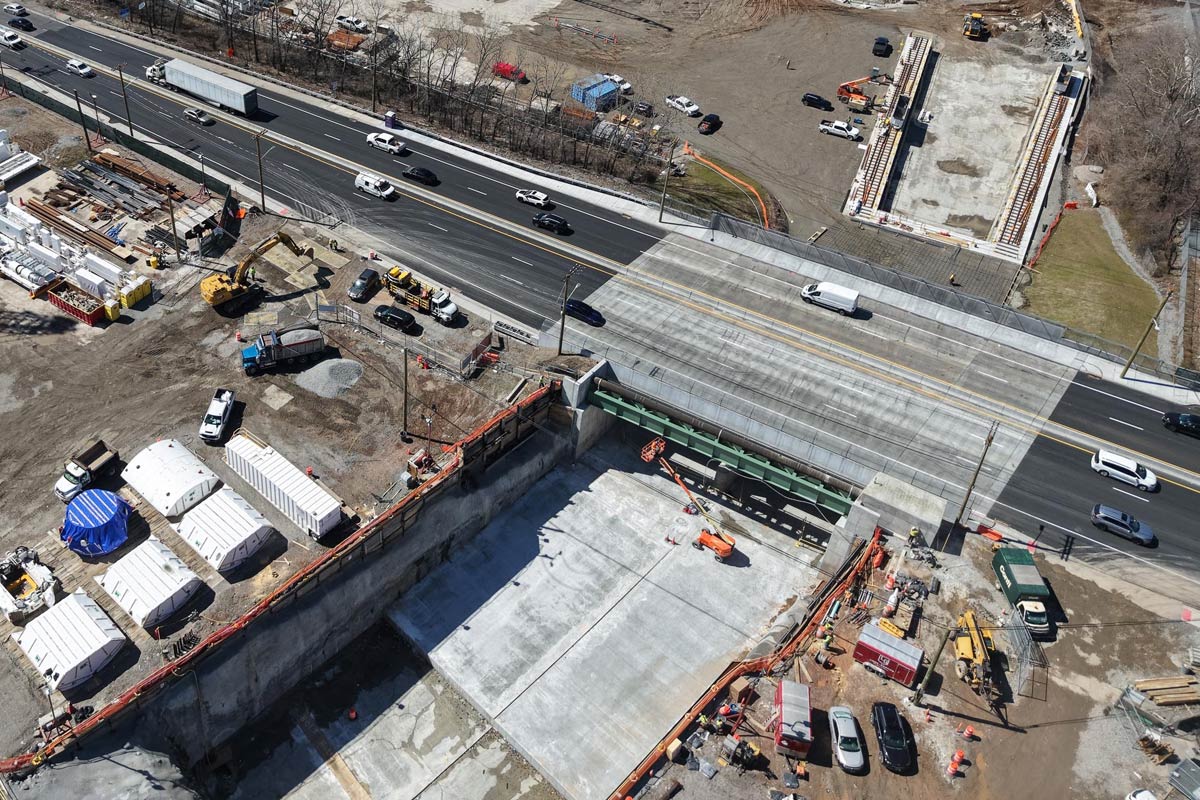
Project conditions such as drive length, diameter, and ground constraints determine the optimal muck-handling system
Rail-based muck haulage remains a workhorse in the tunneling industry. While other methods – conveyor belts and slurry plants used in conjunction with slurry TBMs – provide viable alternatives under certain conditions, oftentimes muck cars offer the best balance between flexibility and adaptability, cost and site constraints.
Muck haulage by rail: system choices
When ground conditions lead to the selection of a rock or EPB tunneling machine, contractors can typically choose between continuous conveyors or muck cars on rail to remove spoil from the excavation. (Slurry TBMs, naturally, require a slurry pipe system and treatment plant.)
Within rail-based systems for spoil removal, options include: rollover cars that rotate to discharge into a pit; side-dump cars that discharge sideways or through a tipping mechanism; and lift-off cars that are hoisted to the surface by a crane. The project requirements, available space and the site layout drive whether muck exits through a portal or a shaft, with portals generally offering more room to develop multi-track yards and shafts concentrating activity into a tighter footprint.
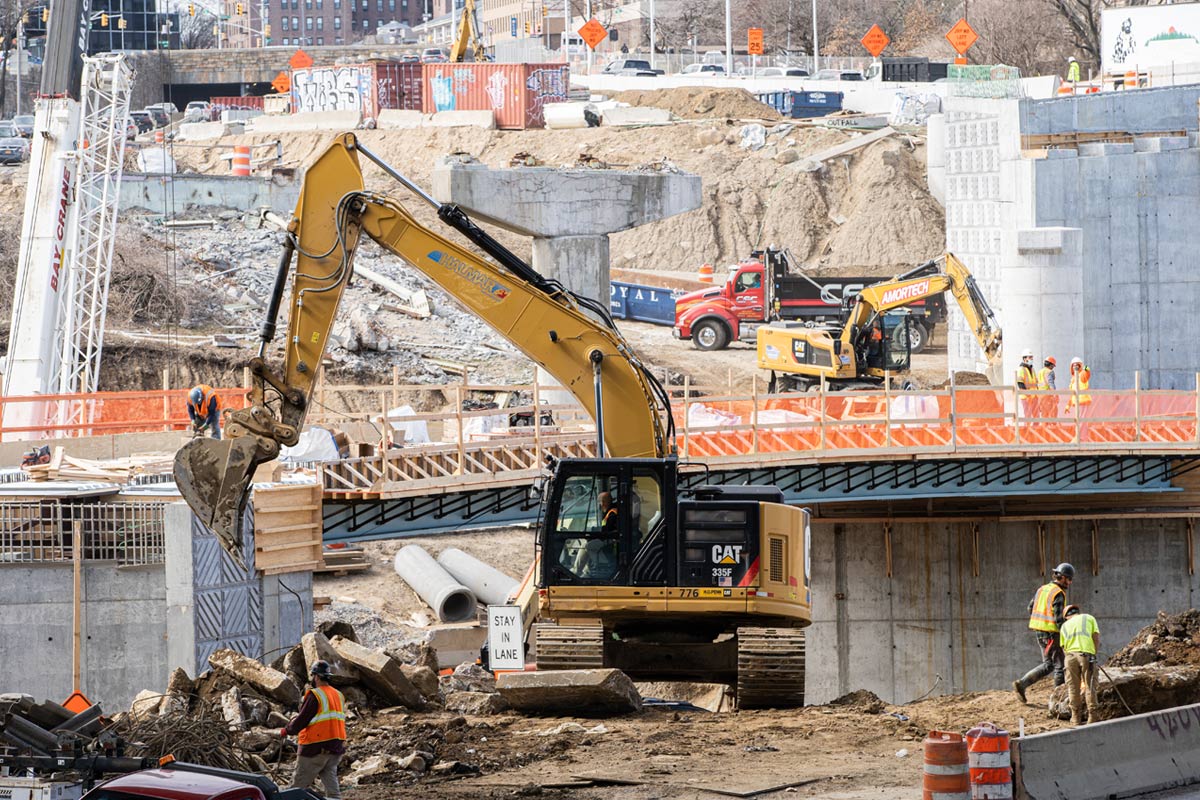
For the purposes of this article, we will focus on mucking using rollover and side-dump cars. We talked with Francesco Chiappalone, Project Manager at The Lane Construction Corp., who was involved in the recently completed Seattle Ship Canal CSO tunnel and is currently working on the Palisades Tunnel in New York for the Schiavone-Lane-Dragados Joint Venture (“SLD”) – both of which opted for mucking setups using muck cars.
Equipment and infrastructure needs
A rail-based muck system starts with the cars themselves, sized and configured to match TBM production, tunnel diameter, and the available discharge area. Mining Equipment Ltd. has supplied Lane with complete rolling stock packages—muck cars, track components, and dumping systems—for multiple projects (including the Ship Canal and Palisades jobs), with locomotives sometimes procured separately when specific power or control requirements apply.
Key elements include:
• Track systems, including curves, switches, and sidings, both in the tunnel and on the surface.
• Locomotives capable of hauling multiple loaded cars per train on grades and curves typical of the alignment.
• Power and control systems.
• Dumping stations: rollover frames or side-dump rigs; coordinated with cranes, loaders, or secondary conveyors.
Because these are complex, tightly integrated systems, Chiappalone stresses that most projects involve some level of customization, even when they build off established concepts.
Choosing the right method
Several general rules help determine when rail-based muck haulage makes sense versus conveyors, and which rail configuration fits best.
• Tunnel length: For short drives—on the order of a mile or less—the upfront cost and time to install conveyor towers, vertical belts, and storage units can outweigh the cycle-time advantage of continuous haulage. On Lane’s Palisades rock tunnel, less than a mile in length, muck cars offered a better balance of mobilization effort and production.
• Cycle time and geology: In cases where advance rates may be relatively slow, there is less of an impact of the TBM “waiting for the train.” Conversely, situations with high advance rates can favor conveyors assuming the site can accommodate them.
• Space constraints: At Seattle’s Ship Canal Tunnel, a roughly 14,000-ft EPB drive from a deep, medium-diameter shaft in an urban setting, conveyors might have made sense from a cycle perspective but were ruled out by the limited surface real estate and the need for a vertical conveyor system.
• Diameter and volume: Larger diameters generate more muck per stroke; at Palisades, a 29-ft excavation requires two full trainloads per stroke, pushing the limit of a train-based system. Chiappalone notes that beyond about 30 ft, calculations typically favor conveyors as the most efficient solution, while very small tunnels may not have the physical space for trains at all and use a totally different spoil removal system.
In choosing between rollover and side-dump approaches, side-dump arrangements tend to be mechanically simpler than full rollover systems, provided the site has enough room to develop the dump area.
Customization and optimization
Palisades’ approach illustrates how contractors can fine-tune rail systems to their specific project conditions. While the underlying concepts—train length, car volume, dumping method—are familiar, each project requires adjustments to car length, dumping station location, track layout, and the interface with muck handling equipment.
For the Palisades Tunnel, the SLD Joint Venture worked with Mining Equipment to design a new side-dump system adapted from an existing concept and configured for twin tunnels, with multiple surface tracks so that one train is always staged and ready. At Ship Canal, by contrast, the deep shaft and tight urban footprint drove the design toward a compact rollover arrangement dumping into the shaft and removed via a crane.
Case studies in practice Palisades Tunnel
• Drive type: Rock TBM, ~29-ft diameter, less than 1 mile long.
• Haulage: Rail-based muck cars from a portal, with a custom side-dump system and multiple tracks at the surface to keep trains cycling.
• Considerations: Short length, slower rock advance, generous site footprint, and the need to turn two full trains per stroke pushed the team toward a high-throughput side-dump yard vs. rollover equipment or conveyors.
Seattle Ship Canal Tunnel
• Drive type: EPB TBM, approximately 22-ft diameter, about 14,000 ft long.
• Haulage: Rail muck cars dumping through a rollover system into a muck pit in the shaft, with a gantry crane and clamshell handling removal.
• Considerations: Urban location with limited surface real estate and a medium-diameter shaft made a vertical conveyor system impractical.
In both cases, Mining Equipment supplied the rolling stock and dumping systems, demonstrating how an experienced supplier can adapt mining-industry technology for tunneling applications.
Planning and operational tips
Chiappalone emphasizes that success with rail-based muck systems starts in design and continues through disciplined operation.
For contractors planning a job, he recommends:
• Carefully consider the mucking options during design and procurement; overlooked details can jeopardize the entire operation.
• Engage specialists—suppliers that routinely design and commission these systems bring critical expertise.
• Plan for maintenance from day one, including rail alignment, switch condition, and preventive work on hydraulic or mechanical dump systems.
During operation, teams should focus on:
• Regular inspection of curves and switches to prevent derailments and excessive wear.
Monitoring hydraulic oil, hoses and seals.
• Monitoring common wear parts and addressing potential issues before they impact production.
While there are several muck removal approaches available, rail-based muck cars remain a highly effective tool in the tunneling contractor’s arsenal given the right combination of geology, length, diameter, and site constraints.
Comments are closed here.