
Construction Accelerates on Yonge North Subway Extension
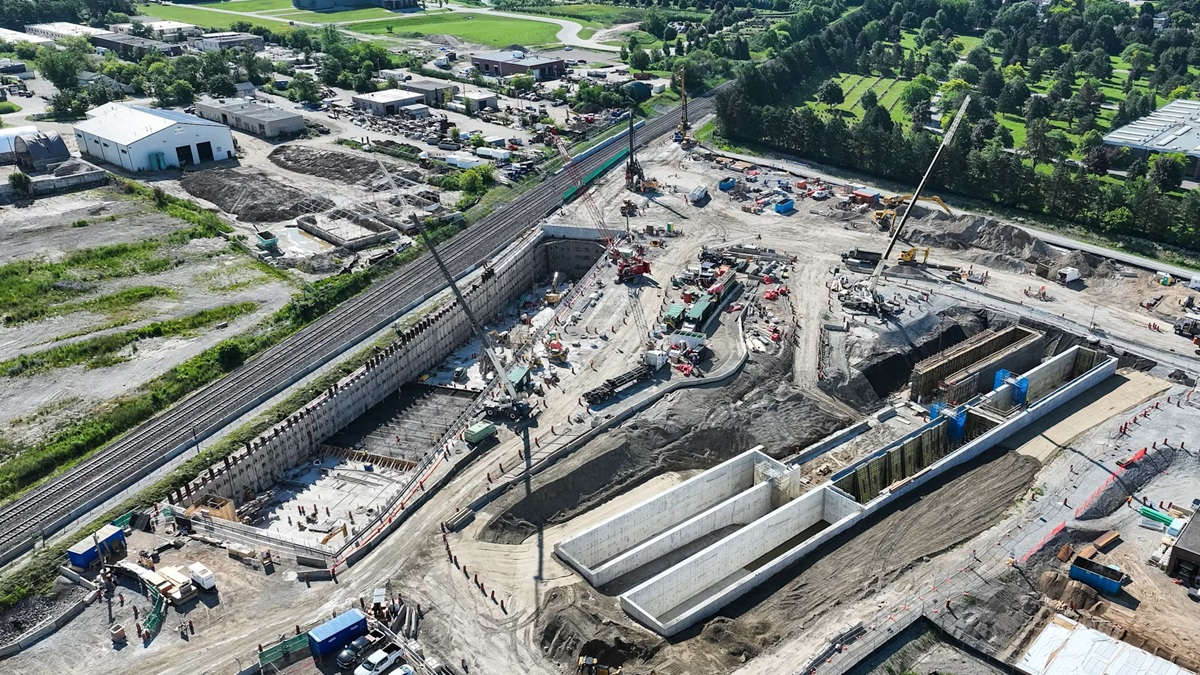
Metrolinx announced July 28 that major construction is now in full swing for the Yonge North Subway Extension, which will bring TTC Line 1 subway service approximately 8 km farther north, with five new stations. In York Region, excavation of the tunnel launch shaft is now complete and work is moving forward to prepare the site for future tunneling.
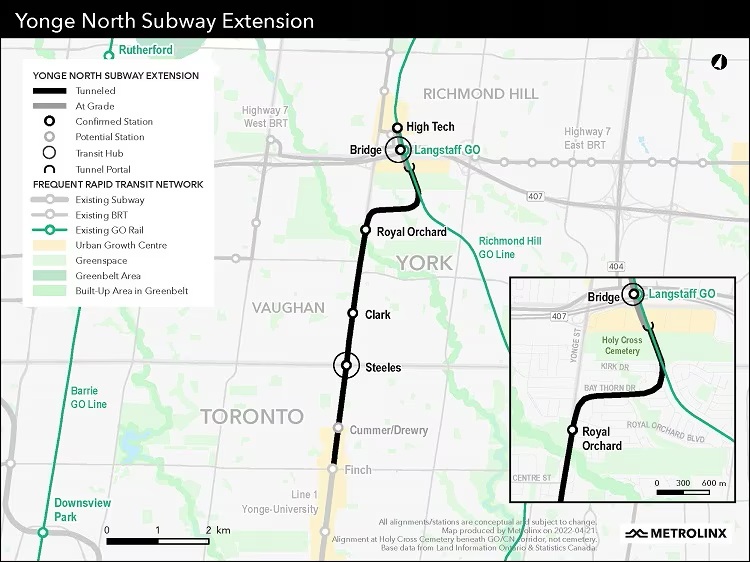
Located just south of Langstaff GO Station on the west side of the existing railway tracks, the launch shaft will serve as the starting point for tunnelling, where the twin tunnel boring machines (TBMs) will eventually begin digging the underground portion of the extension. Once launched, the TBMs will excavate 6.3 kilometres of twin tunnels that will connect the extension to existing Line 1 service at Finch Station.
Reinforced concrete foundations were installed deep underground to create the outer walls of the launch shaft and support the surrounding ground during excavation.
Elsewhere on the site, work is underway to prepare areas where excavated soil and rock from future tunnelling will be stored before being hauled away.
Each TBM is made up of thousands of parts, including a large rotating wheel – called a cutterhead – that will excavate through soil and rock underground.
While construction work shifts into a higher gear, an important milestone has been reached in the search for teams to design and build the extension’s five new stations, as well as the tracks, support systems, and other infrastructure needed to bring TTC Line 1 service farther north.
Teams that qualified through an earlier request for qualifications process have officially been invited to submit proposals to deliver the work.
Extending Line 1 north will transform the commute for thousands of riders. The Yonge North Subway Extension includes new stations at Steeles, Clark, Royal Orchard, Bridge and High Tech — serving communities in Toronto, Vaughan, Markham and Richmond Hill.
Once complete, the extension is expected to carry more than 94,000 riders each day, reduce travel times by up to 22 minutes and cut greenhouse gas emissions by more than 4,800 tonnes annually.
As the project moves forward, construction will also support local economic growth, creating up to 4,300 jobs each year during construction.


Comments are closed here.