Mega Machines: The Future of Large-Diameter Tunneling Takes Shape
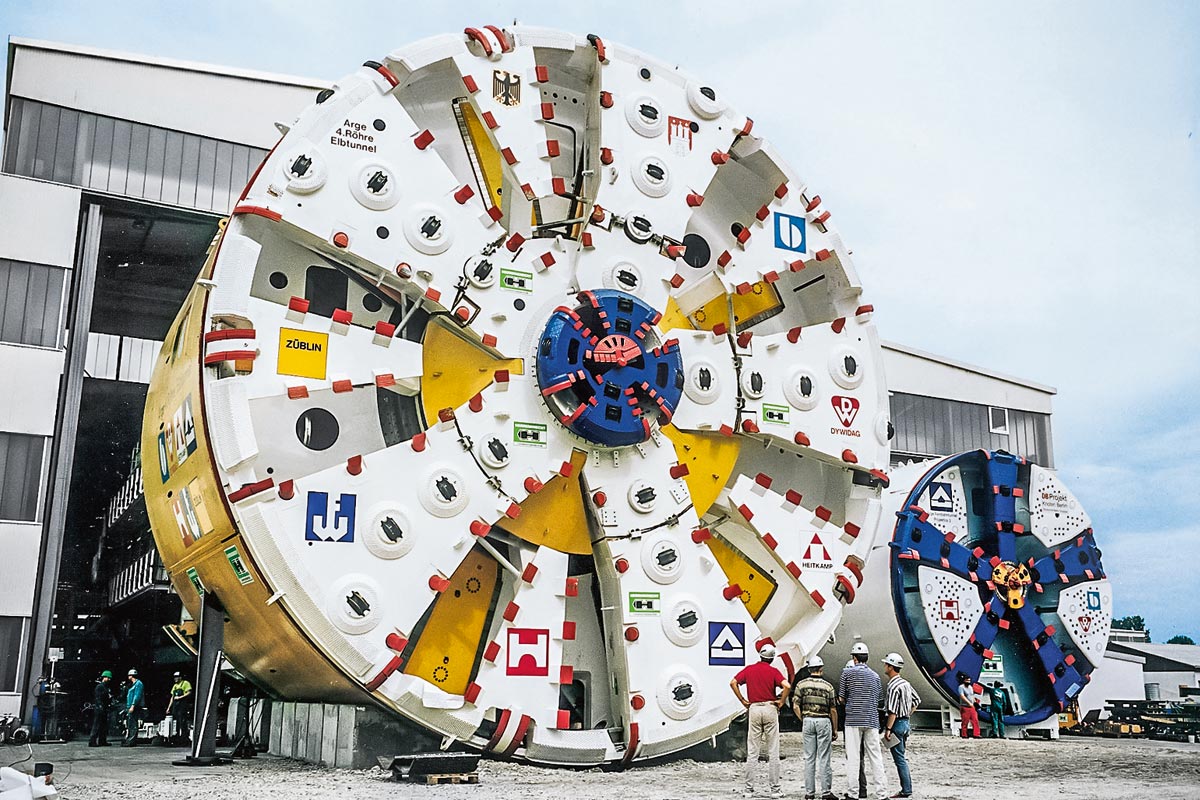
Since its founding in 1977, Herrenknecht AG has become a leading supplier of tunnel boring machines for the global market. During that time, the company has provided machines for some of the world’s most iconic projects – the Gotthard Base Tunnel in the Alps, the 4th Elbe River Crossing in Hamburg, Germany, and Hong Kong’s Tuen Mun-Chek Lap Kok Tunnel, to name a few.
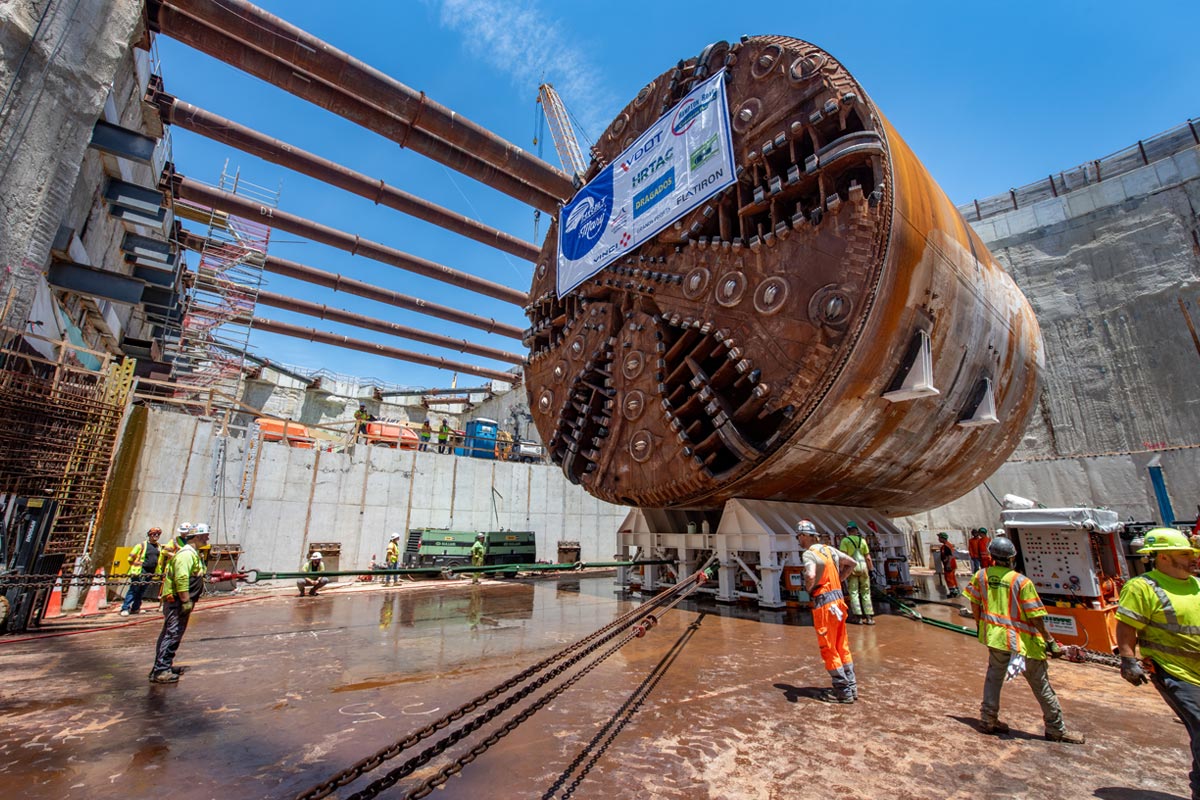
In the United States, both the Hampton Roads Bridge-Tunnel Expansion and CBBT Parallel Thimble Shoal projects holed through in 2025 using Herrenknecht machines, while the company also completed the manufacture of the nearly 54-ft diameter TBM for the upcoming BART Silicon Valley Phase II project in San Jose, California. Herrenknecht machines have been used for a variety of other water and sewer projects in a range of sizes across the country.
To learn more about the future of tunnel boring technology, especially the increasing use of large-diameter machines, TBM spoke with Steffen Dubé, President and General Manager of Herrenknecht Tunnelling Systems USA, Inc. Dubé has more than 20 years of experience with the company in a variety of roles in Europe and North America.
TBM: The last 10-15 years there have been several projects with TBMs exceeding 15 m; do you see this trend continuing? What is driving the demand (highway, single-bore metro, other)?
Dubé: The trend will continue for sure. Herrenknecht’s unparalleled XXL tunneling legacy – from Hamburg 4th Elbe River Tunnel to Hong Kong TMCLK – documents how challenging diameters work in partnership between client, contractor und manufacturer. We are looking forward to the next jobs.
15 meters in diameter and up are mainly needed for multi-lane highways where they offer the most gain in capacity and traffic safety with additional emergency lanes, for example. Also, the industry only has started to touch on the potential of multi-purpose tunnels, e.g., the combination of road and utilities or road, metro or railway in one tunnel. In densely populated areas, concepts implementing metro stations inside the tunnel cross section are gaining importance as they render extensive excavation works from the surface unnecessary. Single-bore, dual-track metros will still be a viable option under individual circumstances.
TBM: What types of projects and geology may lend themselves to a large bore? What should a client consider when specifying a large-diameter TBM?
Dubé: Larger diameters offer more capacity. Especially in the context of the globally growing urban agglomerations, large-diameter tunnels make use of the underground efficiently where above ground the space for developing much needed infrastructure is limited. The available cross section offers space to install service lines such as electricity or data, for example.
Large-diameter tunneling defines specific demands regarding jobsite logistics. For example, the muck logistics need to be able to cope with larger volumes. With an increase from 15 to 18 meters, 44 % more muck has to be handled. Segment handling requires equipment and vehicles carrying higher loads. And to start with, transport logistics for the (larger) machine’s components from the manufacturer’s workshop to the jobsite are always a challenge.
If you enlarge the diameter of a tunnel, you must plan a deeper alignment because the required overburden grows accordingly. Deeper alignments in turn often entail higher ground and water pressure that has to be considered with the machine design.
TBM: What have been some of the technological advances that were needed to allow the practicality of large-diameter TBM tunneling? What areas are being developed to further improve its applicability? (Wear-sensing cutters, robotic cutter changes, monitoring, ‘see-ahead’ technology, grouting, etc.)
Dubé: Obviously, the larger the machine the higher the performance parameters have to be: thrust, drive power and torque. Installing stronger motors and hydraulic pumps is only part of the story. Targeted design of a multitude of engineering aspects follows.
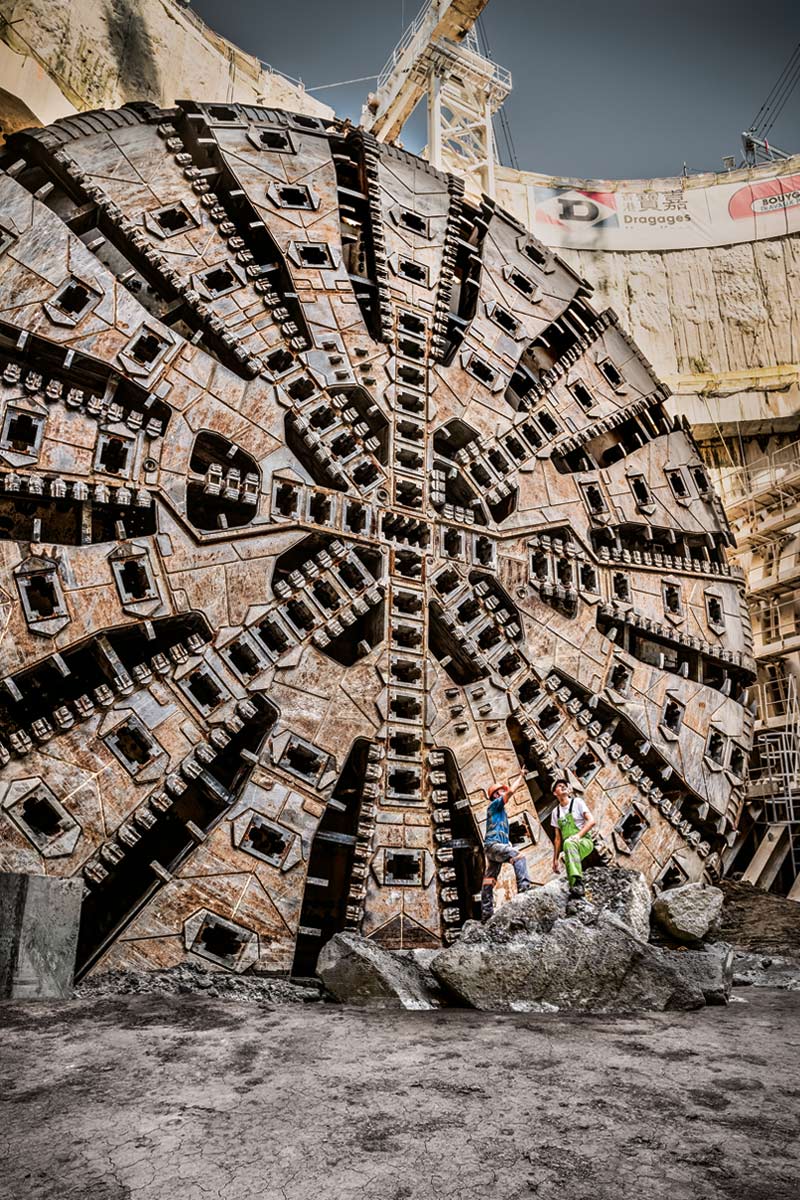
Our concept of the accessible cutterhead is the most efficient and safest solution for coping with extreme values of ground and water pressure that follow from deeper tunnel alignments, especially when crossing under rivers, estuaries and other waterways. Replacing the excavation tools has to be done from a safe working area inside the cutting wheel and under atmospheric pressure under these circumstances. Personnel exposed to high pressure and, in general, occupational safety when working exposed to the ground in the excavation chamber is one, if not the biggest challenge, on large diameter TBMs in unstable or ground water bearing grounds.
Excavation tool monitoring is indeed a crucial aspect. The tools’ increased rotation speed for outer disc cutters as well as the higher excavation volume challenge the tools’ durability. Damage to the tools has to be minimized and replacement intervals have to be optimized to ensure efficient tunneling.
TBM: What are the common challenges relating to the ground? With large diameter TBMs, it seems natural that mixed faced conditions would be more prevalent.
Dubé: The large cross section of the tunnel face increases the probability to encounter mixed-face conditions. Mixshields and Variable Density TBMs are the best solutions to work safely and efficiently under these conditions. Mixshields have offered for decades the possibility to use the accessible cutting wheel technology. Latest, this possibility has been developed to be used and Variable Density machines, the first projects completed show very encouraging results.
TBM: What are some of the lessons learned from previous projects that are being implemented on current machines?
Dubé: The Variable Density TBM for the Hampton Roads tunnel showed impressively the potential of the machine concept for larger diameters in challenging ground conditions. It combines a slurry circuit for muck transport and a screw conveyor for face support control. The slurryfier box at the end of the screw conveyor transfers the crusher maintenance to an atmospheric pressure working area. Furthermore, clogging of the grid and the lower section of the pressure chamber is no longer an issue as well as other challenges arising in the invert section of the excavation chamber have been eliminated. And, eminently important, the accessible cutting wheel technology has been successfully applied on this 14-meter TBM.
As with other extreme parameters, XXL tunneling works best with all project partners at the same desk, acting and communicating in best trust that solutions are possible to almost any technical challenge.
TBM: How large do you see machines getting? Is there a practical limit? What are the limiting factors (if any)?
Dubé: According to our engineers’ calculations a diameter of 22 meters is technically possible – depending on the ground conditions – with today’s know-how and technology. We have to take into consideration, though, a number of challenges. One of them being face support. The larger the diameter, the larger the area of the tunnel face and the more difficult it is to control the face pressure safely and precisely. This is valid for excavation as well as cutting wheel maintenance works.
Another one concerns XXL diameter EPB Shields. They would require values of cutting wheel torque that in turn would challenge our today’s ability to produce the needed diameter of bearings.
Especially for XXL diameters, efficient and intelligent assistance systems will be extremely valuable to drive the TBM as close as possible to the optimum operating point and to reduce wear and tear and consumption of consumables. Our Herrenknecht.Connected system offers the digital solution to the demand that a huge amount of a machine’s sensor data have to be used to drive the machine and to manage the overall jobsite operation as efficiently as possible.

Comments are closed here.