
Study: Sepulveda Corridor Project Could Reduce Commute Times by 50 Percent
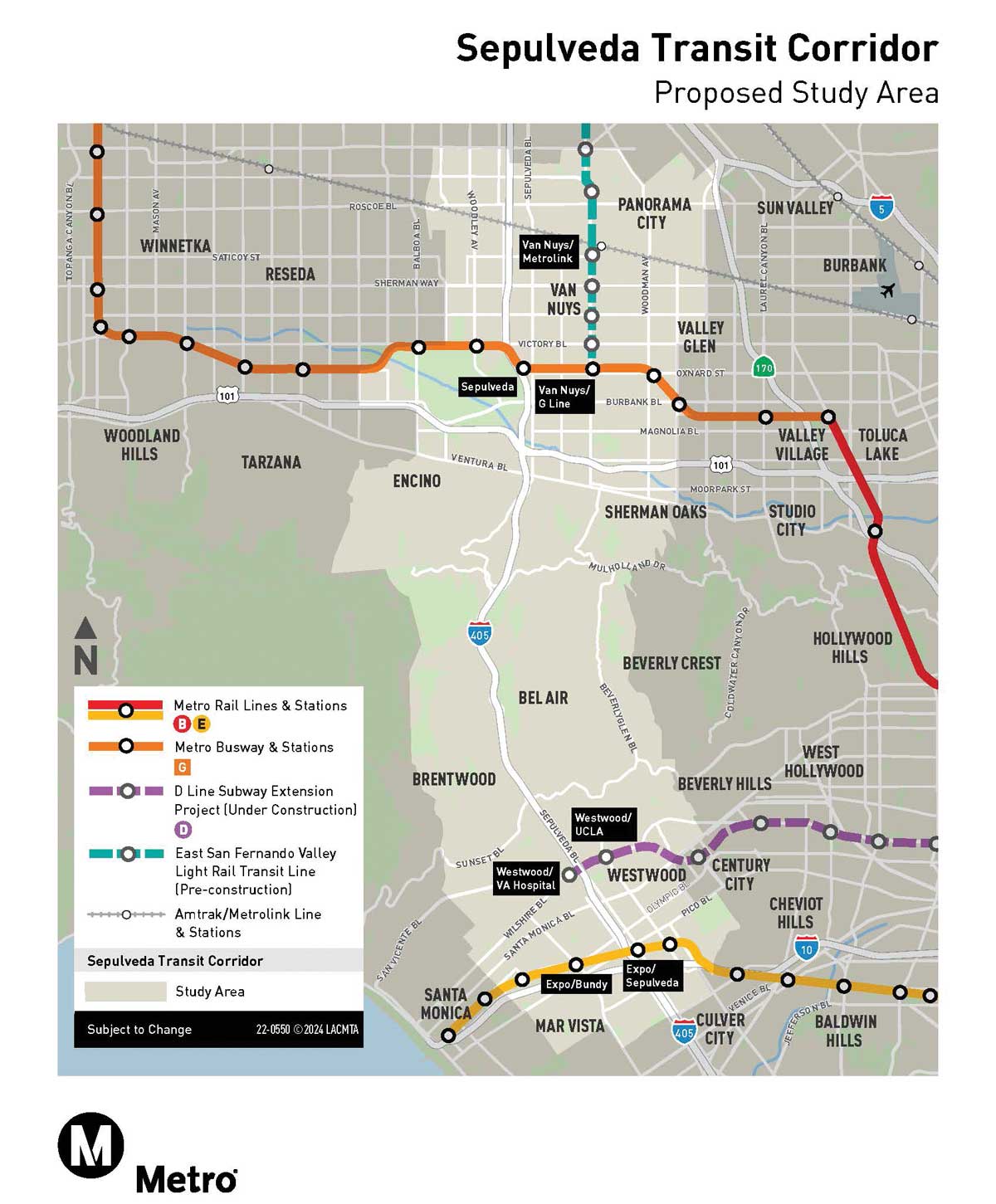
The Los Angeles County Metropolitan Transportation Authority (Metro) in late May released new details about its Sepulveda Transit Corridor project, including the benefits, anticipated costs and construction schedule. Shared during the first of five community meetings, these details provide important context that will be considered as the project advances and decisions regarding alternatives are made.
If the project is built, travel times between the Van Nuys Metrolink Station to the Metro Expo Line would be between 18 to 33 minutes, depending on alternative selected, while travel times between Van Nuys Metrolink Station to Century City and Santa Monica would range from 25 to 36 minutes and 32 to 50 minutes, respectively.
These commute projections represent significant time savings over the same trips via personal vehicle and could cut travel times by more than half during rush hour. Ridership projections for the alternatives under consideration range from 63,000 to 124,000 daily boardings.
All five alternatives offer a fast, reliable rail transit option for those traveling through the Sepulveda Pass, a valuable benefit over unreliable traffic conditions that make travel planning exceedingly difficult.
Each weekday, more than 400,000 people cross the Sepulveda Pass, and a typical San Fernando Valley commuter loses 59 hours per year to traffic delays just from the evening drive home on I-405 between Wilshire Boulevard and Ventura Boulevard. Currently, only 2% of people who travel through the Sepulveda Corridor do so on public transit via bus.
In addition to providing residents and visitors with an alternative to sitting in traffic on the I-405, the project stands to improve air quality, public health, traffic safety and the region’s economic productivity.
The cost to build the project is estimated to be between $15.4 billion and $24.4 billion, while yearly operations and maintenance of the system would cost between $130 million and $157 million. Cost projections are preliminary, as the project is only at 15% of design and will continue to be refined as it advances through the development process.
The Draft Environmental Impact Report (DEIR), released June 2, contains detailed analysis of the environmental impacts of the five alternatives, which include underground options. Metro is now accepting public comments as part of the CEQA environmental review process.
An online interactive version of the DEIR is available at this link. The DEIR and related files in PDF format can also be found in the DEIR Folder. The printed Executive Summary is available at local libraries within the project area, and the full DEIR is available at the Metro Library.
The 90-day comment period will end on August 30, 2025. Comments will be accepted throughout the comment period online, via email, project hotline and U.S. Mail as follows:
• Comment form
• Email: sepulvedatransit@metro.net
• Project hotline: 213.922.7375
Additional information about the Sepulveda Transit Corridor project can be found here.


Comments are closed here.