
Work Begins on Latest Extension of Rome Metro
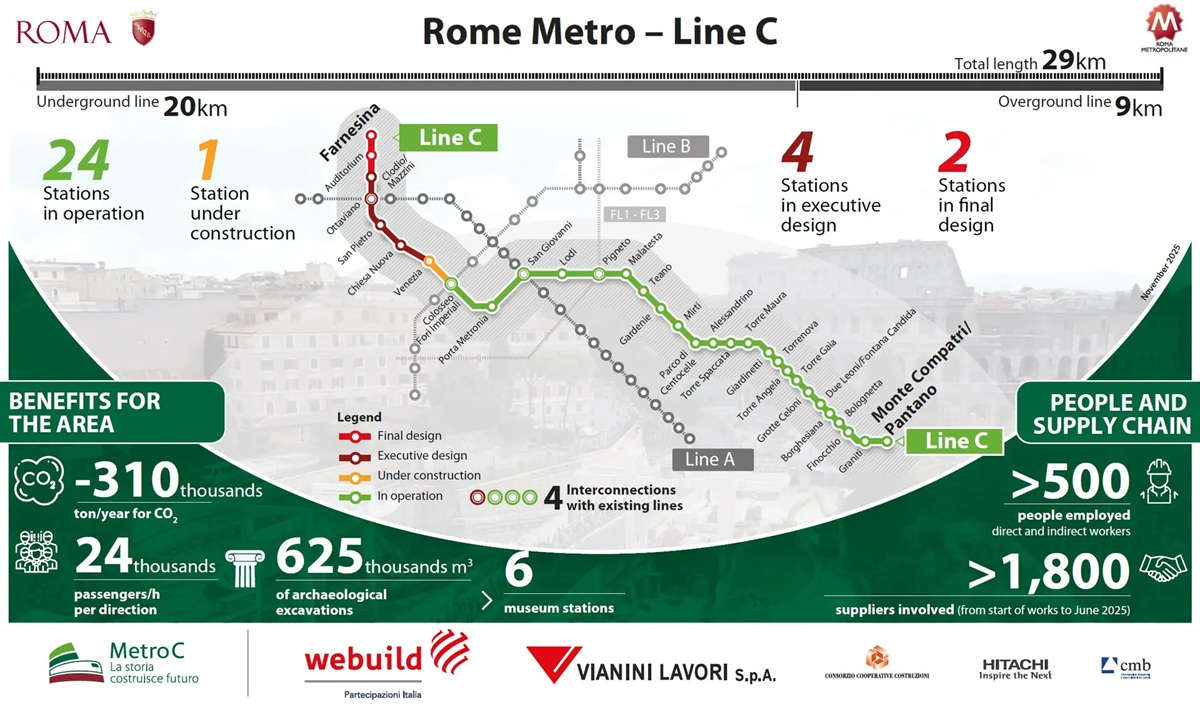
Work is set to start on T1, the latest extension of Line C of Rome Metro, which will lead to the arts and sports districts of Flaminio and Foro Italico in the city’s northwest. Following the handover of the areas allocated to the development of the extension by Roma Metropolitane to Metro C S.c.p.A., the general contractor led by Webuild and Vianini Lavori, workers have begun preparing the sites where two underground stations – Auditorium and Farnesina – will be built along the 3-km route of the extension. The stations will follow the five already under construction along the line that T1 will extend: Venezia, Chiesa Nuova, Piazza Pia/Castel Sant’Angelo, Ottaviano e Mazzini.
The Flaminio and Foro Italico districts are home to some of Rome’s leading arts, culture and sports centers, such as the Auditorium Parco della Musica Ennio Morricone, the MAXXI arts museum, the Olympic Village and the Foro Italico sports complex. It is also where the Ministry of Foreign Affairs and International Cooperation, known as the Farnesina, is located.
The future Auditorium station will be built next to the Palazzetto dello Sport and will serve the Flaminio arts and culture district. It will have three entrances, six levels underground to a depth of 45 m.
The future Farnesina station will be the terminus of the line where the Foro Italico and the ministry are located. It will have three entrances, have seven levels underground to a depth of 43 m. It will also be designed to accommodate a future extension towards Grottarossa and Tor di Quinto.
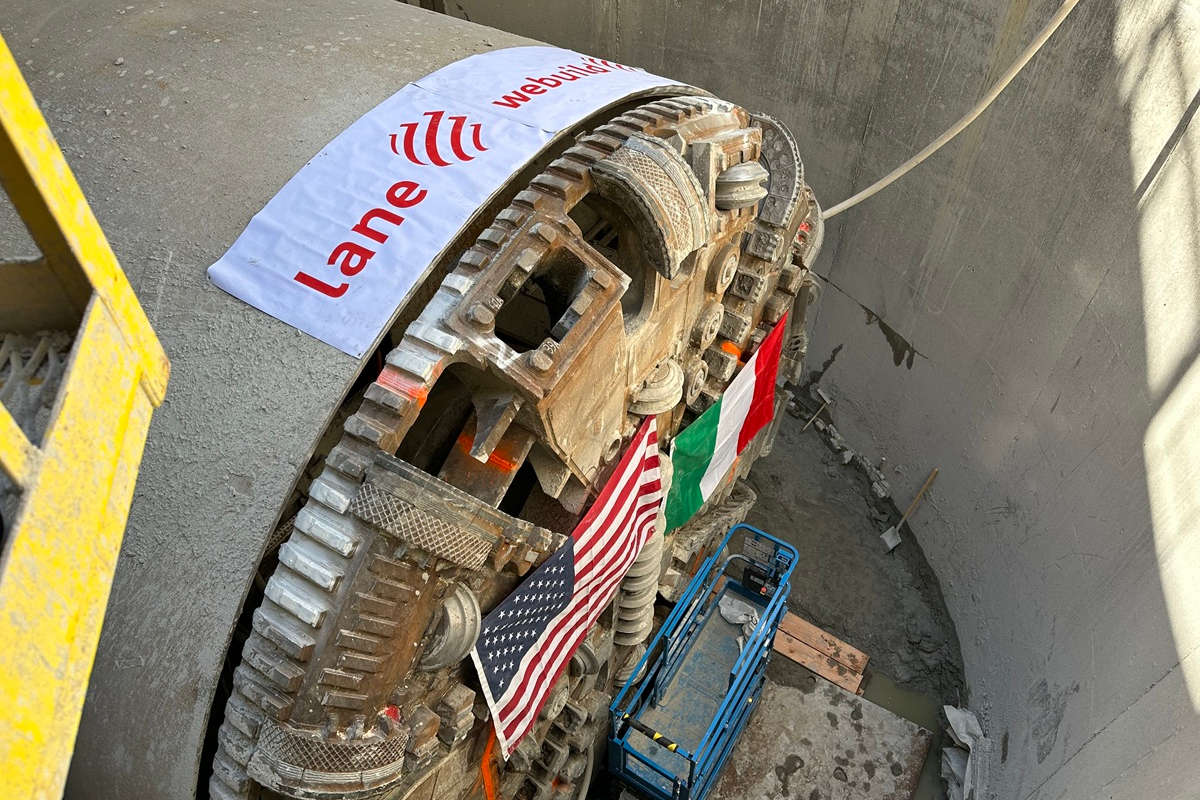
The T1 project will require highly advanced engineering solutions to build reinforced concrete diaphragm walls descending to a depth of up to 80 m. It will also be applied to the use of tunnel boring machines (TBMs) to excavate the metro’s running tunnels.
T1’s route will pass beneath the Tiber River at three locations: between the Farnesina and Auditorium stations; the Auditorium and Mazzini stations; and the Piazza Pia/Castel Sant’Angelo and Chiesa Nuova stations. The latter crossing will represent one of the most demanding technical challenges of the project, as excavation will take place little more than 20 m beneath the riverbed.
With the start of work on the T1, Line C takes another important step in transforming Rome’s public transport system. It will help create a more accessible, sustainable and connected city. Once completed, the line will extend for a total of 29 km and have 31 stations. It will link the eastern terminus at Monte Compatri/Pantano to the western one at Farnesina. To date, 24 stations have been completed, from the eastern terminus through to Porta Metronia and Colosseo/Fori Imperiali stations in the historic center, both of which were opened last December.
Line C brings together parts of the city that are separated by lengthy and complicated journeys. By creating connections between Rome’s eastern suburbs, the historic center and some of the Italian capital’s main cultural, sporting and institutional destinations, the project represents an investment capable of generating value far beyond transportation. It will support the city’s growth, attractiveness and competitiveness for decades to come.

Comments are closed here.