
Workers Safe Following Partial Collapse on LA Outfall Tunnel
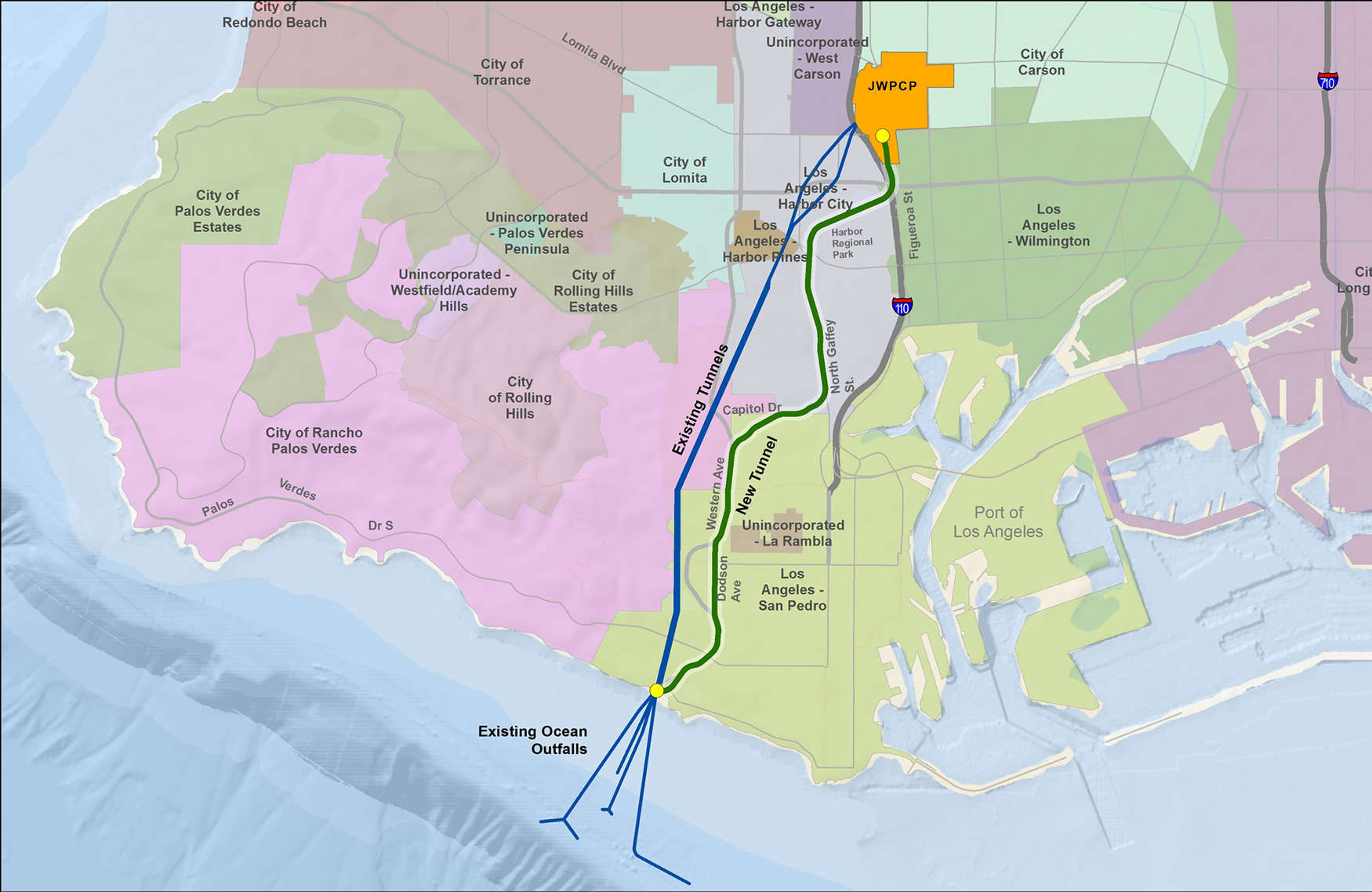
The Los Angeles County Sanitation Districts report that a portion of its new outfall tunnel being constructed collapsed at approximately 7:45 pm on July 9. The Districts reported that all 31 workers inside the tunnel were safely evacuated.
A statement on the Districts’ webpage read: “We are very pleased and relieved that all tunnel workers were brought safely back to the surface. We deeply appreciate all first responder agencies for their swift and professional efforts. No major injuries have been reported at this time.
“We are working directly with the contractors to conduct a full investigation of the cause of this incident. The investigation will look at the safety, engineering and structural integrity of the tunnel and has already begun. Clearwater Tunnel operations have been halted while this investigation takes place and there is no timeframe for how long the process will take. Safety remains the highest priority of the Los Angeles County Sanitation Districts. We will continue to coordinate with all relevant agencies and provide updates as they become available.”
According to the statement, the collapse occurred at approximately the 5-mile mark of the 7-mile long, 18-ft diameter tunnel. No surface settlement has been reported in the vicinity of the collapse and the area will continued to be monitored, the Districts reported. The Districts said that updates will be provided as the investigation continues and information becomes available.
The $630 million contract to build the Joint Water Pollution Control Plant Effluent Outfall Tunnel was awarded to Flatiron/Dragados USA with NTP issued in April 2019. The tunnel will be approximately 7 miles long and 21.5 feet in excavated diameter (18 feet in internal diameter). The tunnel lining consists of bolted and gasketed precast concrete segments. Tunneling began in September 2021 and was approximately 80 percent complete as of June 2025.
It was expected that tunneling would encounter two distinct ground conditions, according to information provided to TBM by the Districts. The first half of the tunnel traversed soft ground with depths up to 110 feet. The second half of the tunnel was to go through hard rock with depths up to 450 feet where the tunnel was expected to be subjected to intense ground squeezing conditions due to the overburden pressure.

Comments are closed here.